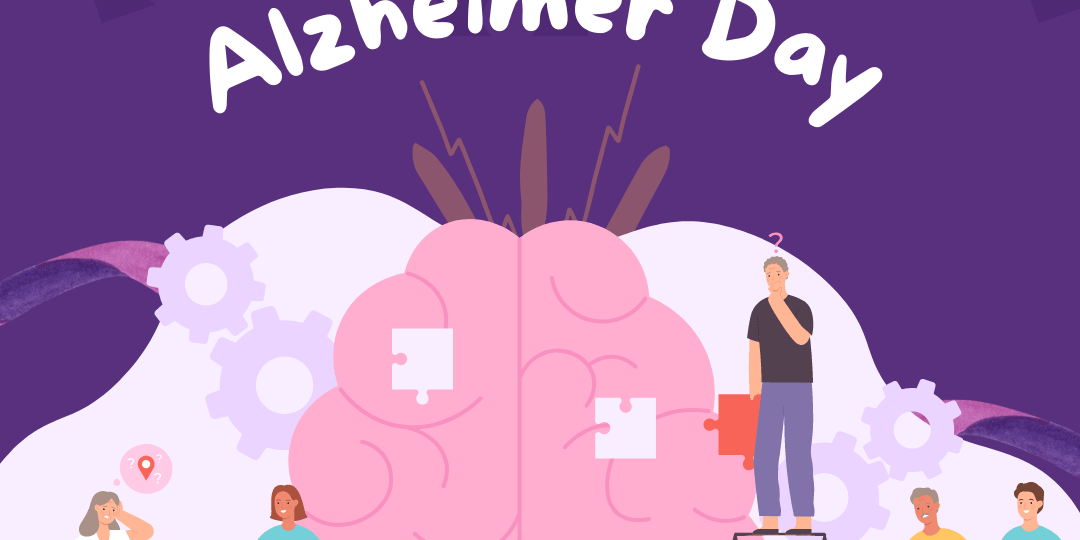
Whilst September is the Dementia and Alzheimer’s awareness month, September 21st marks World Alzheimer’s Day. Every year the event has a different theme raising awareness of these life-limiting illnesses such as how to recognise their symptoms and the importance of early diagnosis. This year’s theme is “Never too early, never too late”, with a focus on the pivotal role of identifying risk factors and what to avoid to delay, and potentially even prevent the onset of dementia.
This is a cause close to many of our hearts – be sure to keep an eye out on our social media channels as we hold several fundraising events throughout the year for Alzheimer’s UK!
What are dementia and Alzheimer’s diseases?
Simply said, dementia is a group of syndromes that affect brain functioning with an ongoing decline. Most often it is associated with memory loss, mood swings, and declining thinking skills and in some types of dementia it can cause problems with swallowing and eating leading to aspiration and low appetite.
Alzheimer’s disease is a type of dementia. However, people often get confused about the difference between both. Alzheimer’s is the most common cause of dementia affecting people above 65 and because of its slow progression and symptoms, it is often not treated as a problem and founded in late stages. So, if you are in doubt book your GP appointment as soon as possible.
Who is affected?
Dementia is one of the most common global diseases, which affects millions of people around the globe every year. According to NHS, there are more than 944,000 people in the UK who have dementia and the cases are expected to reach 1 million by 2025. It affects most commonly people over the age of 65 and usually is misdiagnosed because people associate memory loss or speech issues as a result of getting older, stress, tiredness, medicines and many more factors. However, in some cases, this disease affects people under the age of 65 and as a result, is called early or young-onset Alzheimer’s disease (around 1 in every 20 people).
If you notice that happens occasionally and you are above the age of 65, we recommend you get in touch with your GP.
Symptoms
Unfortunately, dementia and different types of dementia such as Alzheimer’s, vascular dementia and Parkinson’s are not curable at the moment, but the symptoms could be relieved with the help of medicines. Therefore, an early diagnosis can slow down the progression of it in some cases and the person could be able to maintain their mental and physical functioning for a longer period of time. Moreover, a diagnosis gives time to the person and their family and friends to adapt to the changes and prepare for the future illness’s progression.
According to NHS and Alzheimer’s Society the first signs are usually minor memory problems and as the condition develops, memory loss becomes more severe and the following symptoms can occur:
- confusion, disorientation and getting lost in familiar places
- difficulty planning or making decisions
- problems with speech and language
- problems moving around without assistance or performing self-care tasks
- personality changes, such as becoming aggressive, demanding and suspicious of others
- hallucinations and delusions
- low mood or anxiety
How to reduce the risk of Alzheimer’s and other dementias?
As dementia and Alzheimer’s most commonly affect people over 65, age is the biggest risk factor for dementia. However, there are some ways to help reduce the risk of the diseases.
- Keeping Active – being physically active not only keeps you fit but is good for your heart, and blood circulation and also improves your mental well-being. A combination of aerobic and strength-building activities will help you reduce your risk of dementia as they keep you fit in different ways – aerobic activities keep your heart, lungs and blood circulation healthy, whereas strength activities work your major muscle groups that help you do your everyday tasks.
- Balanced and Healthy Diet – eating a healthy diet not only improves your overall health and reduces the risk of many conditions like heart attack, stroke, cancer, obesity, etc. but also may reduce your risk of dementia. Eating a balanced diet means that you provide your body with the nutrition it needs from different foods. Doing so help your brain to stay healthy. The NHS Eatwell guide gives you more information on what we should eat to achieve a healthy and balanced diet.
- Don’t smoke – smoking affects our heart and lungs but also has a negative effect on blood circulation around the body particularly the blood vessels in the brain.
- Drink less alcohol – drinking alcohol, especially in excessive amounts, exposes your brain to high levels of harmful chemicals.
- Stay mentally and socially active – staying socially active and engaging in mental activities keeps your brain active, improves your well-being and may help you to delay or potentially prevent dementia. Puzzles, crosswords, arts and crafts are some of the examples that things that challenge your brain but enjoy doing them.
Support
Dementia and its types are progressive illnesses affecting the brain functioning and the daily activities of the ones who live with it. We understand how difficult the period is not only for the one who is dealing with dementia but to the family and friends.
In such times it is important to know that there is support and people who can help with what you are going through. There are many sources of information such as the Alzheimer’s guide provided by the Alzheimer’s Society, different local and government organizations as well our dementia home care team.
Our Alcedo Care team can help you and support you with your day-to-day activities, respite care when you feel it is too much and need a break, live-in care for your elderly who live alone or simply companionship. You name it, we are here to help.
Interested in us supporting you and your family with dementia or Alzheimer’s care? Simply fill out our form below and your local branch will give you a call to discuss your requirements.